Between Her Knees
Most of us learned about our hair from the floor.
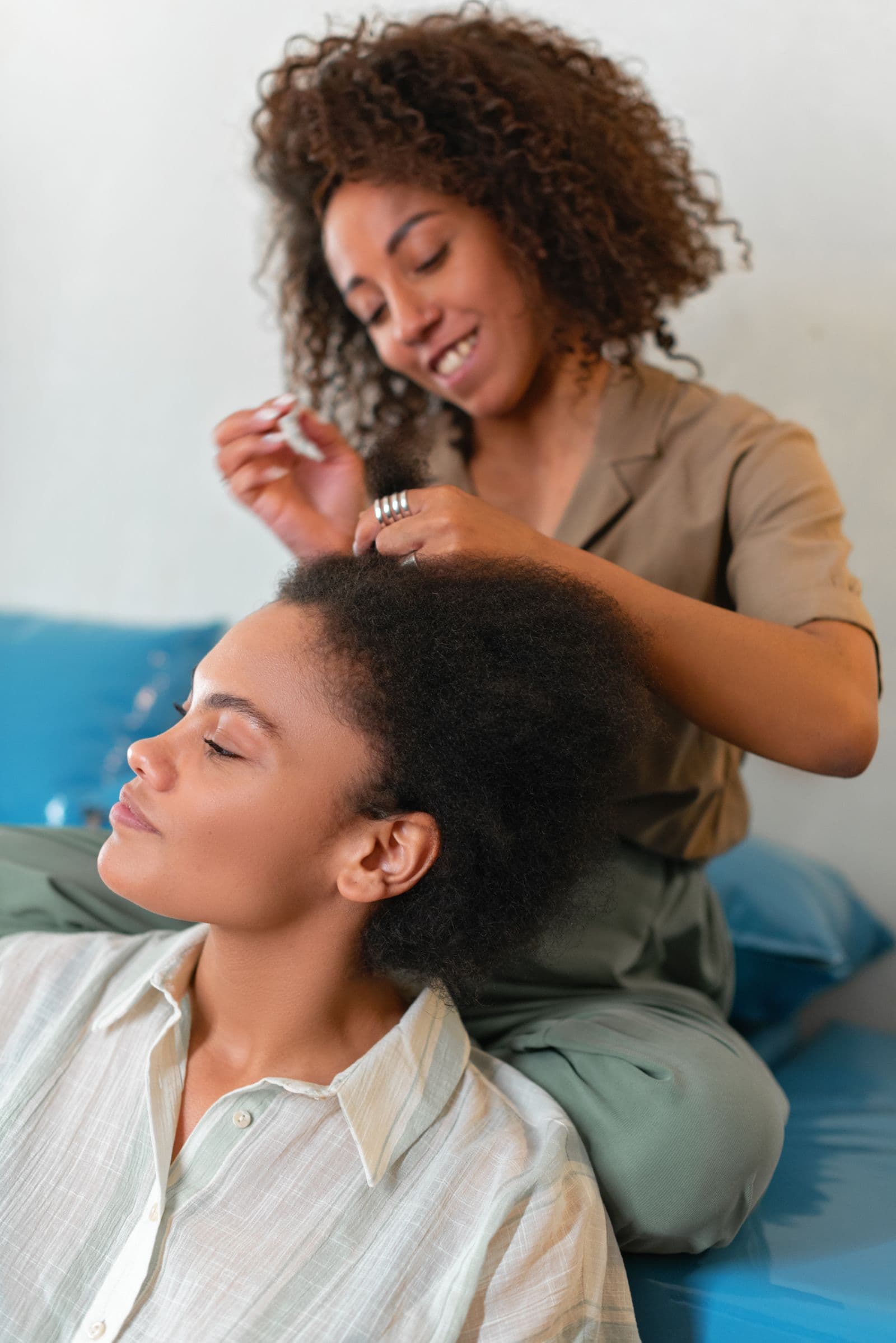
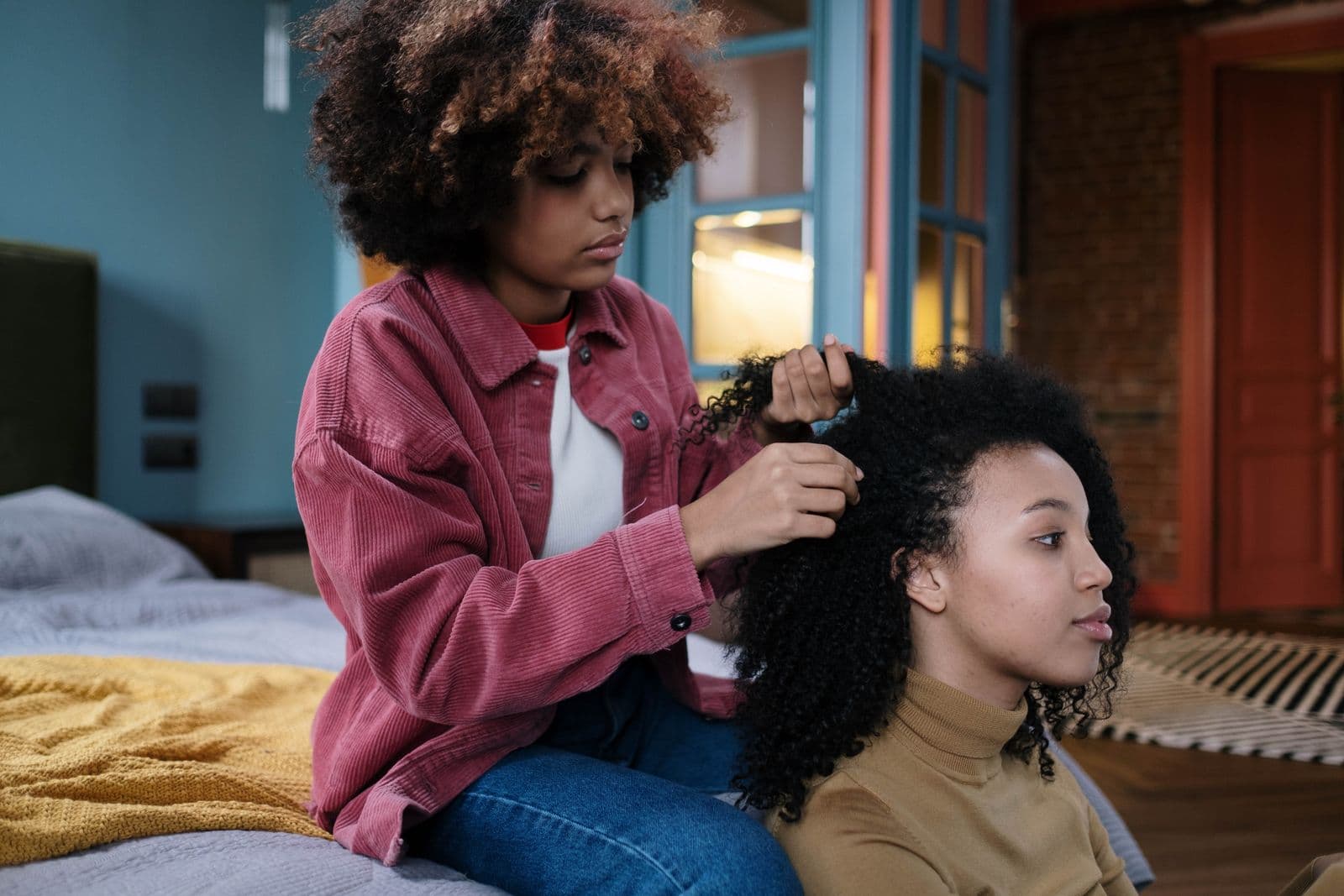
You sat on a cushion or a folded towel, on the cold kitchen tiles, your back against the front of the chair and your head tilted into the space between an older woman's knees. Your mother. Your grandmother. An aunt, a neighbour, an older cousin who had been promoted to the job. Above you, hands moved through your hair with a confidence you did not yet have about anything.
It usually happened on a Sunday. There was often something cooking. There was usually a radio, or a television in the next room, or the particular Sunday quiet of a house that has nowhere it needs to be. And there was the smell — of oil warming slightly in the hands, of whatever was used in that house, a smell so specific that catching it again as an adult can put you straight back on that floor with your scalp tingling.
This is the memory a great many Black women share, across countries and languages. Long before wash day became a word on the internet, it was this: a recurring appointment with an older woman and your own head.
Green and living — where every ritual begins.
It Was Not Always Gentle
We should be honest about it, because honesty is part of the inheritance too.
Wash day was not only tenderness. There was the comb that caught and pulled. There was the instruction to *keep still* and the firm hand that turned your head where it needed to go. For many, there was the hot comb heating on the stove — the paraffin or gas flame, the metal teeth, the smell of heat near the scalp, the held breath. There was the genuine fear of the burn, and sometimes the burn itself. There was the long afternoon that a child experiences as endless.
Much of what was done was done with love and without the information we have now. The hot comb damaged hair. The tightest plaits stressed the hairline. The detangling was sometimes rougher than the hair could afford. None of that erases the love in it. Both things are true: it was an act of devotion, and some of its methods we have since learned to leave behind.
Reclaiming wash day does not mean pretending it was perfect. It means keeping the devotion and updating the method.
What Was Actually Being Passed Down
Look at what was happening on that kitchen floor beyond the hair itself.
You were being taught that your hair required time — real time, hours of it, set aside and protected. You were being taught that it was worth that time. You were being held, physically, by someone in your family, in sustained contact, for longer than almost any other moment in the week allowed. You were hearing the talk that happens over a head of hair — the gossip, the warnings, the family history, the questions an adult will answer while their hands are busy that they would never sit down and answer face to face.
Wash day was one of the great transmission lines of Black family life. Knowledge moved down it. So did belonging. A child learning to sit still between her grandmother's knees was learning that she came from somewhere and from someone, and that this someone would spend a whole Sunday afternoon on her.
That is the part worth carrying. Not the hot comb. The hours.
The Loss in Convenience
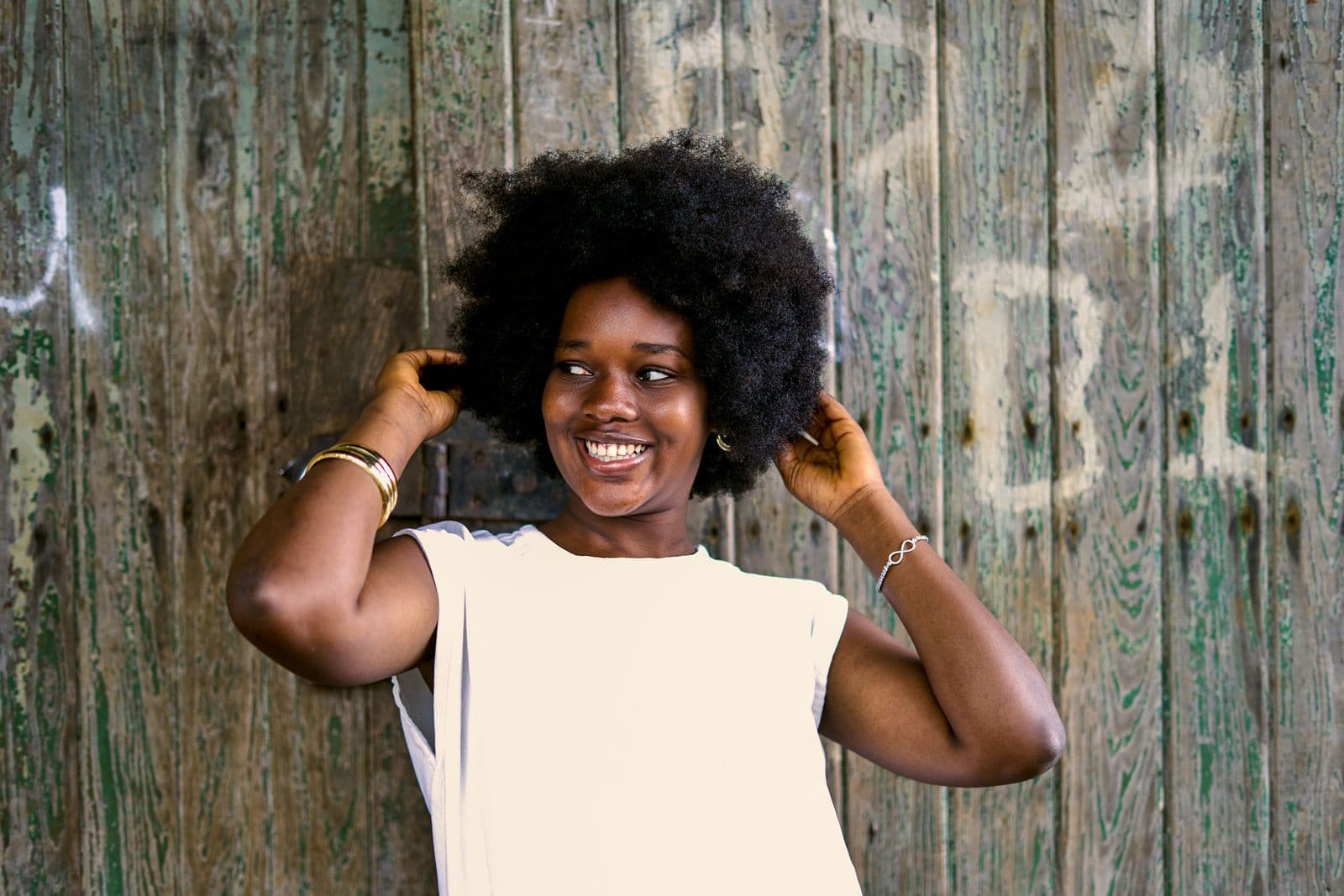
Something happened on the way to adulthood for many women: wash day stopped being a ritual and became a problem. A thing to get over with. A four-hour obligation resented on a busy weekend, rushed, half-done, or skipped until the hair forced the issue.
This is understandable. Nobody is sitting on the kitchen floor for us anymore. The hands belong to us now, and we are tired, and there are a hundred other things demanding the Sunday. The communal ritual became a solo chore, and chores get minimised.
But the hair did not change its requirements. Type 4 hair still needs the time. It still needs the oil worked through with patience, the sections, the slow detangling, the deep treatment that cannot be hurried. The biology that made wash day take an afternoon in your grandmother's kitchen has not been repealed by your schedule.
The question is whether you do that necessary time as a grudge or as a ritual. The hair gets washed either way. Only one of them gives anything back to you.
Green and living — where every ritual begins.
Doing It For Yourself
There is a particular kind of healing in becoming the older woman in the room for your own head — in giving yourself the afternoon that you used to receive.
Make it deliberate. Choose the day. Put on the music that belongs to it. Section the hair with the pre-poo balm and let it sit while something cooks, the way it always sat while something cooked. Detangle from the ends up, slowly, the way you wished you had been detangled. Feel the warmth of the oil in your palms before it goes on. Take the hours. They were always part of it.
You are allowed to do for yourself what was done for you, with more knowledge and more gentleness, and to feel — sitting on your own bathroom floor, hands in your own hair — the whole line of women who did this before you, on Sundays, with the food cooking, holding a child between their knees.
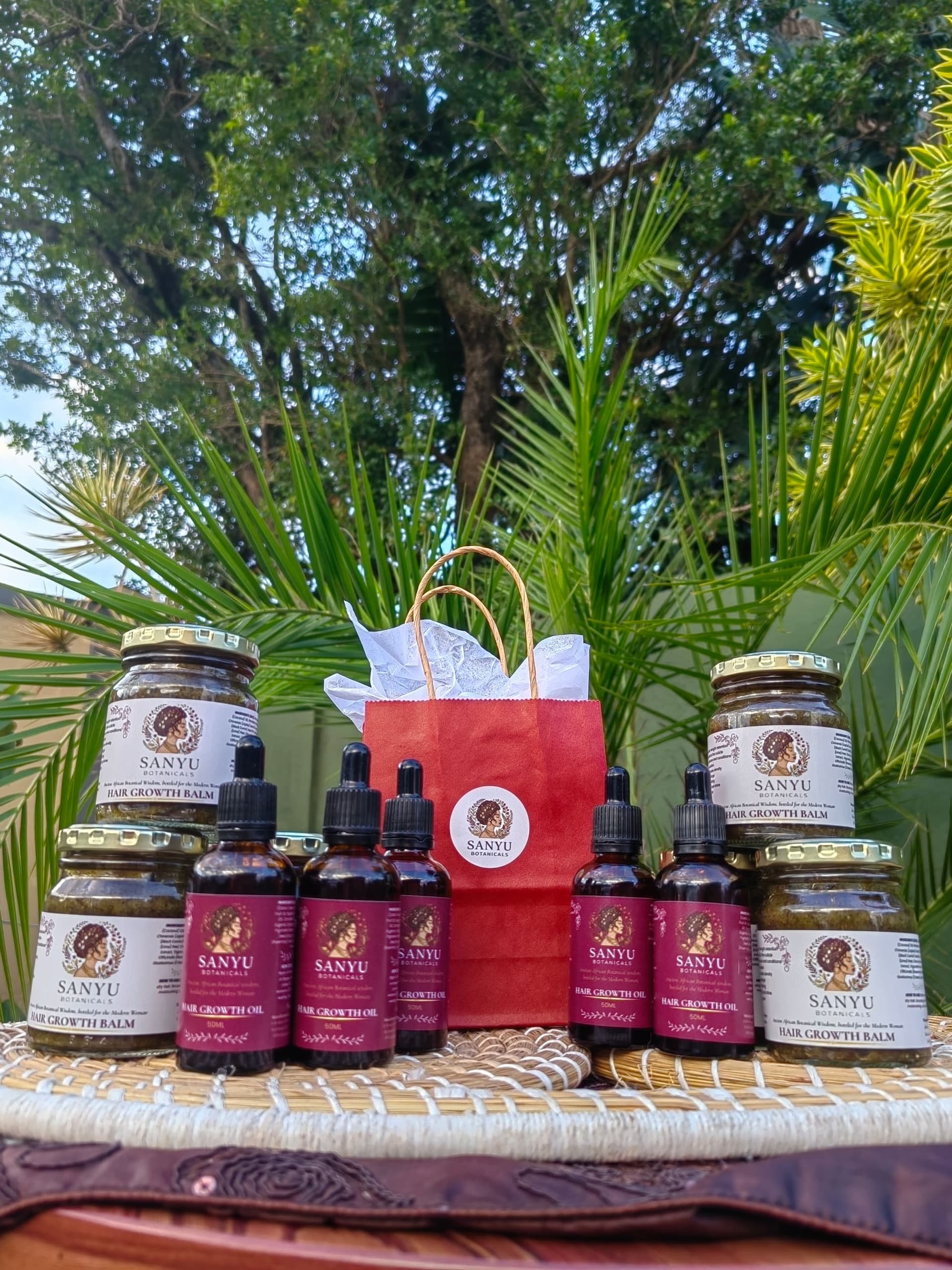
That is what we built Sanyu for. Not a faster wash day. A wash day worth slowing down for.