Where the name comes from
Sanyu is the Luganda word for joy. Luganda is the language of the Buganda Kingdom — the largest traditional kingdom in Uganda, carried through our bloodline in the Kabali-Kagwa family name. We could not call this brand anything else. The intention behind every bottle is exactly that: joy in the ritual, joy in the warmth of oil between your palms, joy in a strand that holds the full length of who you are.

The girl who fried her hair straight.
I grew up not knowing how to care for my own hair. I wanted it to move the way I saw other hair move — flowy, straight, someone else's. So in high school I fried it. Every single day, a flat iron dragged through it, and hundreds of bobby pins held it into shapes it was never meant to hold.
Then came 2020. Lockdown, my first year of university, and — for the first time — the space to listen to my hair instead of fighting it. I started making my own oil. Not to change my hair, but to feed it. And it grew: properly, naturally, as itself.
It did not stop with me. The same oil went into my mother's dreadlocks, my brother's and my sister's afros. Every one of us watched our hair come back — stronger, fuller, healthier than anything we had ever been sold. That is the moment Sanyu stopped being my routine and became something I had to share.
The hair, grown back to itself.
Two bloodlines. One formula.
Sanyu Botanicals sits at a convergence: Ugandan Kabali-Kagwa heritage meets Xhosa, Hlubi, Msimango, and Sotho Thabizolo lineage, rooted in East London, Eastern Cape. The ancestral intelligence of two African peoples — one from the Great Lakes, one from the Cape — meeting in a single dropper bottle.
That is not a marketing narrative. It is the literal architecture of the formulas: developed by someone who inhabits both traditions, who knows from the inside what Type 4 hair has always needed, and who finally had the knowledge to give it what it deserves.

One river from the Great Lakes. One from the Cape.
Both arriving in the same drop.
The honest reason.
Sanyu Botanicals was made in East London — not in a laboratory, but at a kitchen bench, with research, with patience, and with one question that would not leave: why are there so few products formulated with genuine knowledge of what Type 4 hair actually needs?
The market is full of products marketed to naturalistas and formulated for a generic “textured hair” category that collapses the real difference between 3A and 4C. Sanyu refuses that. Every compound was chosen for what it does to hair like ours — at the cortex, at the follicle, at the cuticle. Not at the level of the trend.
Ten compounds. Each one answerable.
Chebe powder from the Sahel — used for centuries by Sara and Basara women in Chad, not to grow hair faster, but to keep every centimetre they already have, all the way to the waist. Black cumin from the Nile valley, whose thymoquinone inhibits the 5-alpha reductase pathway that thins our edges. Rosemary, which matched minoxidil 2% for hair count in a 2023 randomised trial. Castor oil, cold-pressed — ricinoleic acid, a lipid that seals the strand from the outside in.
We add no synthetic fragrance, and we hide nothing. Where the balm leans on a sealant as proven as petroleum jelly or lanolin, we name it plainly — in full, in public, to anyone who asks. The standard was never “all-natural.” It was honest. Every millilitre is a decision we stand behind.
The making.
Nothing here leaves a machine's hands before it leaves ours. Every batch is built at a bench in East London — measured, warmed, stirred, poured, and sealed by the same person who spent months learning what each botanical does to a strand like yours. Small-batch is not a label we earned by staying small. It is the only way to make something this exact.
01 — The gathering
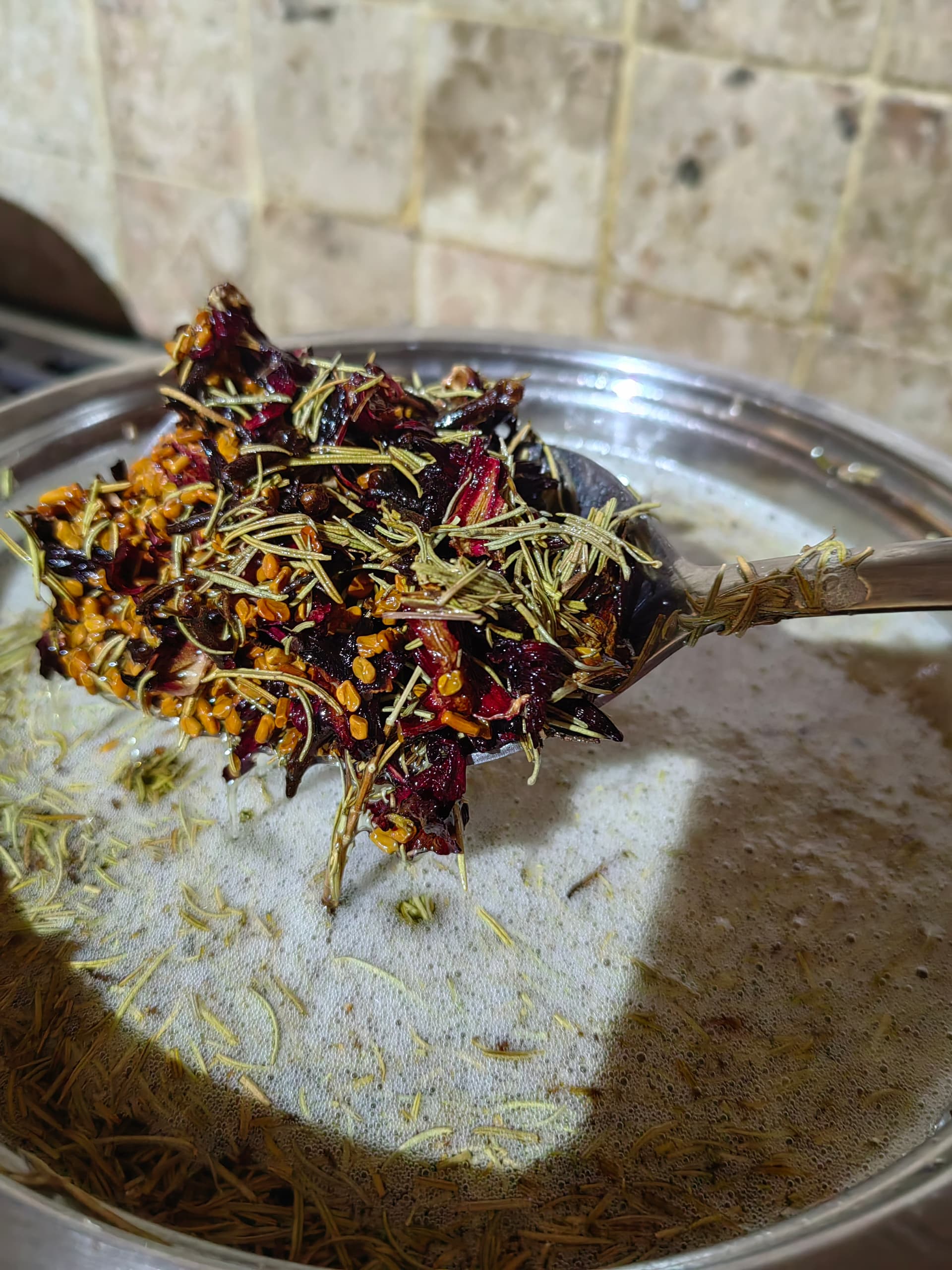
It begins with the botanicals laid out whole — chebe, hibiscus, rosemary, fenugreek, black cumin. Nothing powdered into anonymity. You can see what goes in, because seeing is the first honesty.
Hibiscus, whole.
Rosemary, fresh-cut.
The steeping
Whole botanicals rest in oil for days, not minutes. Heat would be faster. Patience is better — it draws the lipids out without scorching the compounds that matter.
The infusion
The oil deepens to amber and carries the scent of the plants it sat with. This is where chebe gives up its length-keeping intelligence, and rosemary its quiet work at the root.
The chebe balm, mixed by hand. East London, Eastern Cape.
The warming
Butters and waxes are melted low and slow, then married to the infused oil. Too hot and the volatile oils flash off. We hold the line.
The pour
Into amber glass and gold-lid jars, by hand, one at a time. A batch is finished when it is finished — not when a quota says so.
The seal
Capped, labelled, numbered. Each jar knows which batch it came from. If you ever want to trace it back to the day it was made, you can.
Capped, labelled, numbered — the finished batch.
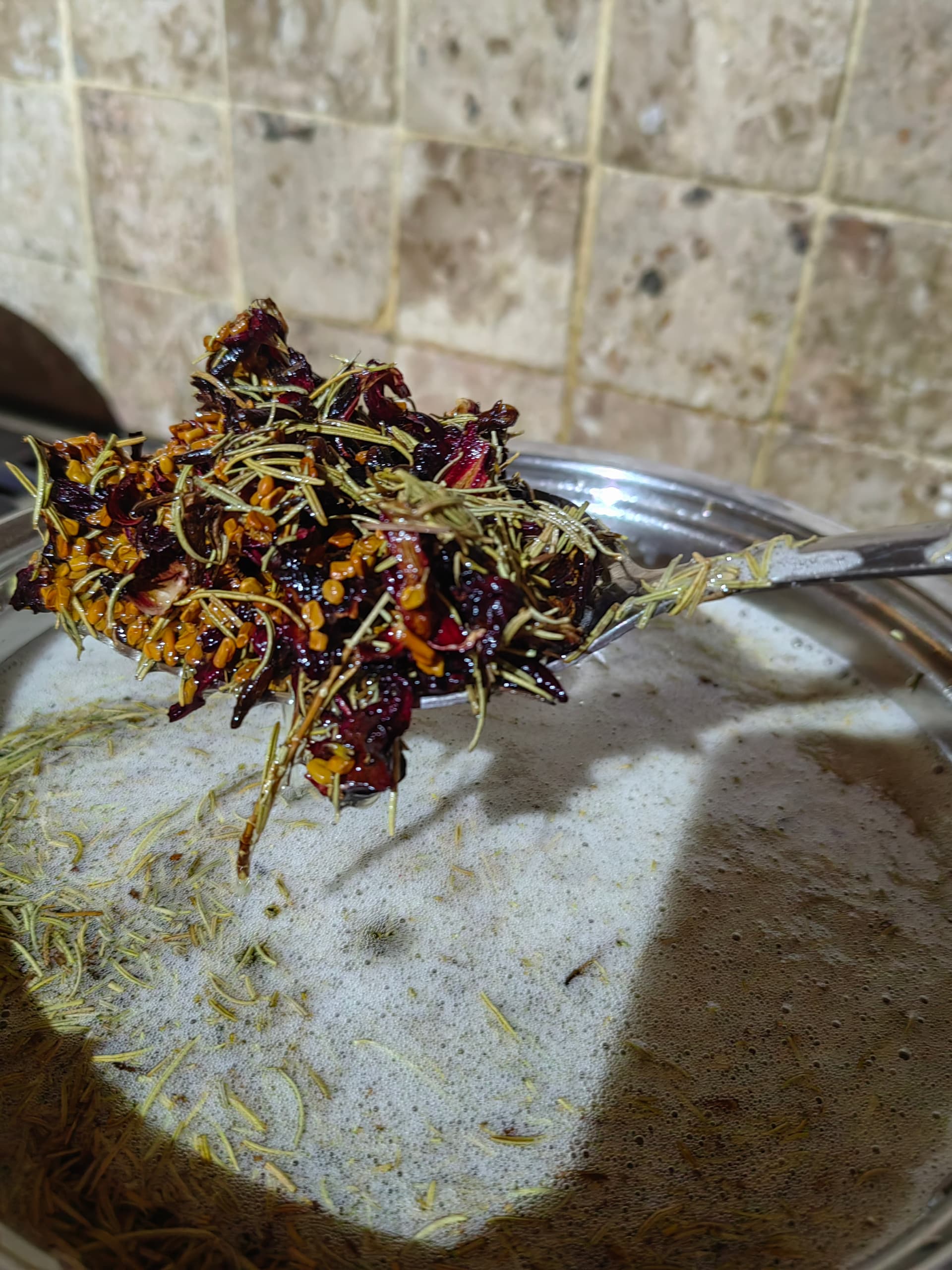
The infusion
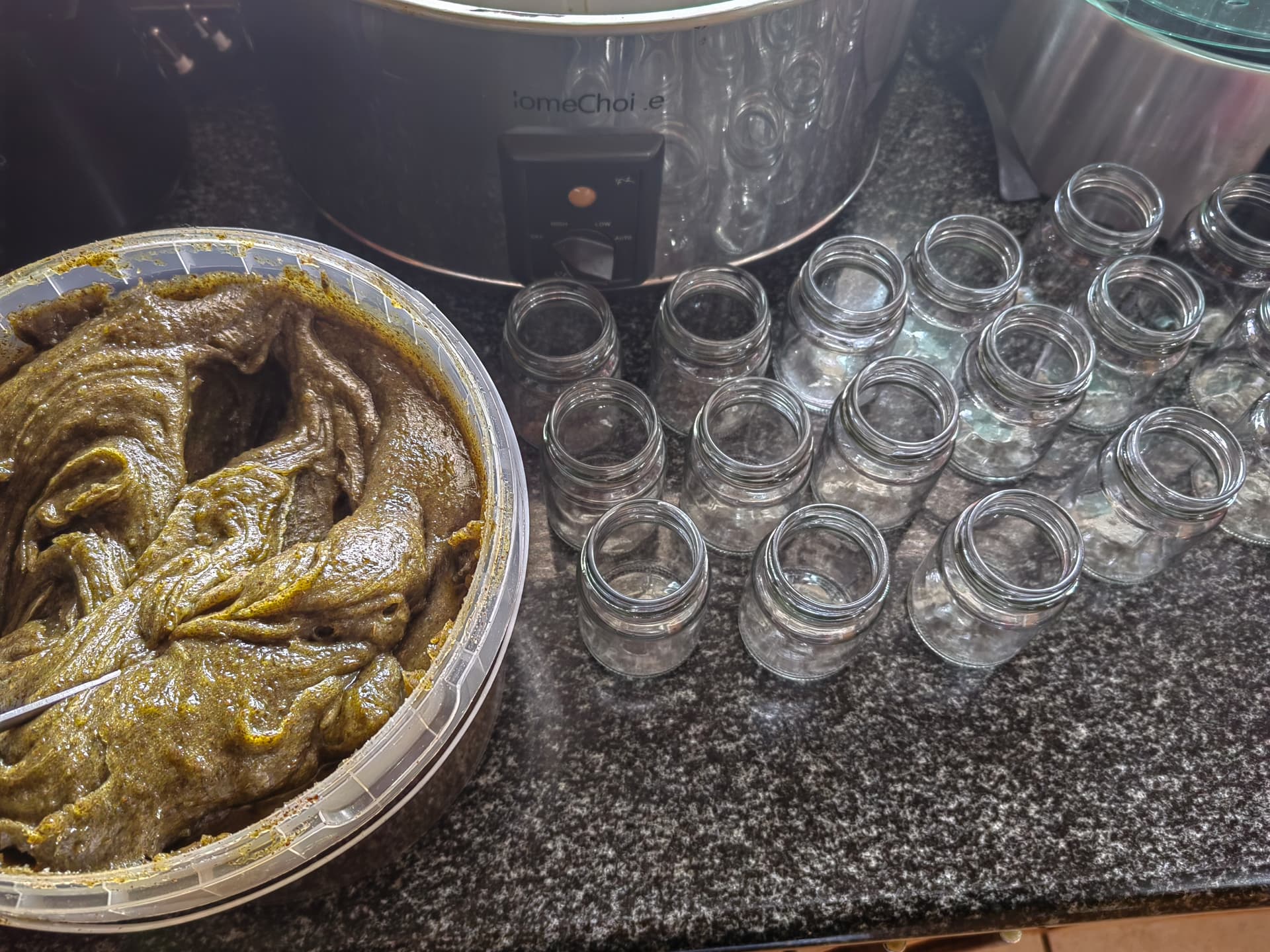
The mixing
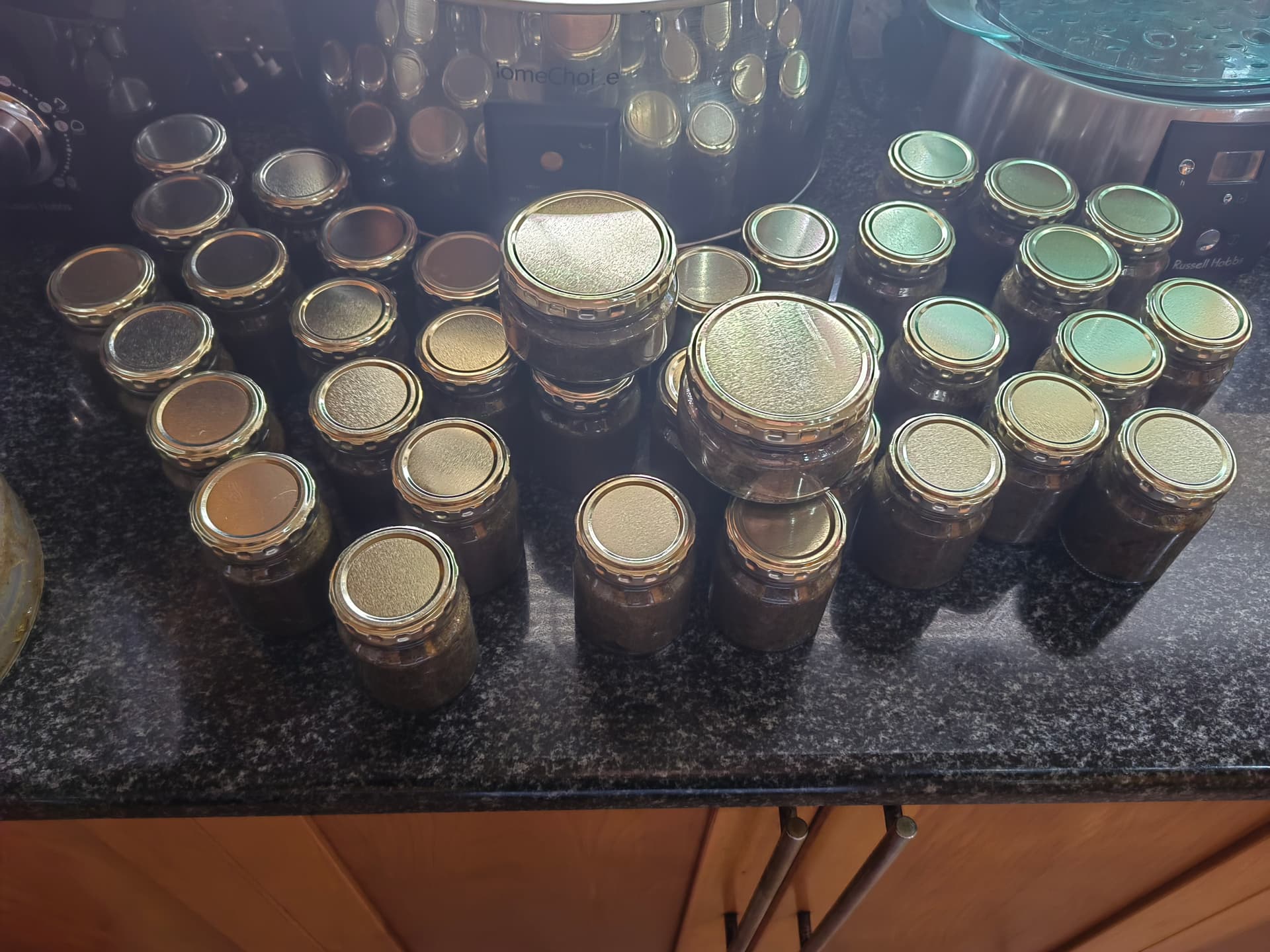
The batch
Then we make the next one exactly the same way. That is the whole promise.
Small batch. By decision.
Each batch is hand-packed in small quantities. This is not a constraint of scale — it is a quality position. When the batch is finished, we make the next one with the same intention and the same ingredients. It does not change.
Angel Circle members receive early access to each new batch before public stock opens. That is how trust accumulates: not through campaigns, but through consistently being present.
We are not selling you hair.
We are handing back something the continent always knew.
The Maker
Nandawula Regine Kabali-Kagwa. Founder. Mirembe Muse (Pty) Ltd. East London, Eastern Cape, South Africa.
A Black woman who got tired of looking for her hair in other people's formulas. Who knew that the knowledge existed across the continent — that it always has — and decided that someone should do the work of gathering it and pressing it into something you can hold in your hand and use without compromise.
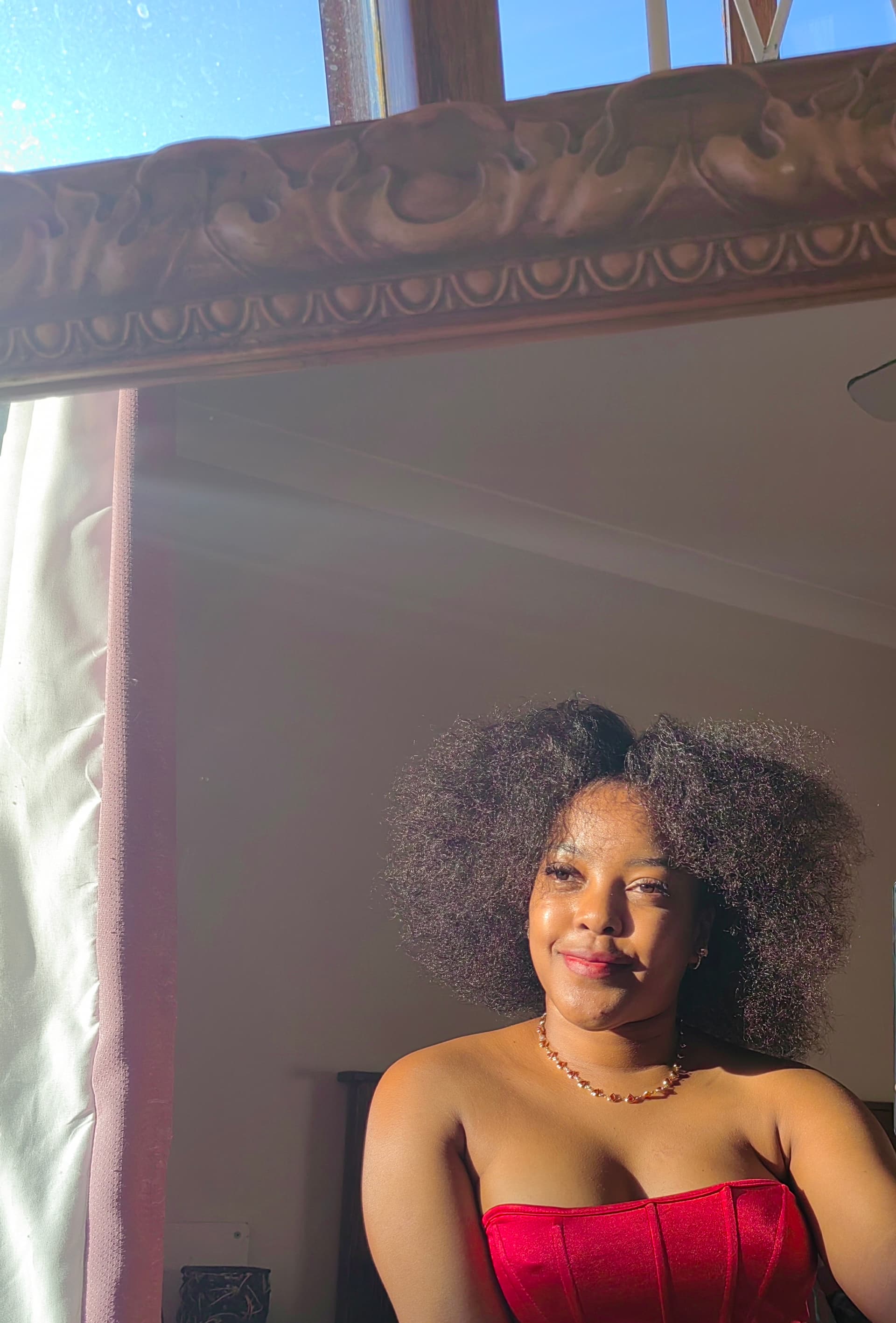
The proof is on her own head.
Nandawula Regine Kabali-Kagwa · East London
The hair this was made for.

Nandawula Regine · East London, Eastern Cape