Before You Start
This is not a product instruction leaflet. You know how to read a label.
This is an attempt to explain why each step exists — the biology, the chemistry, the accumulated knowledge of the women whose hands carried these ingredients forward through generations. When you understand why, the how becomes intuitive. The routine becomes a ritual. And a ritual, done with attention, is a different thing entirely from a procedure done to check a box.
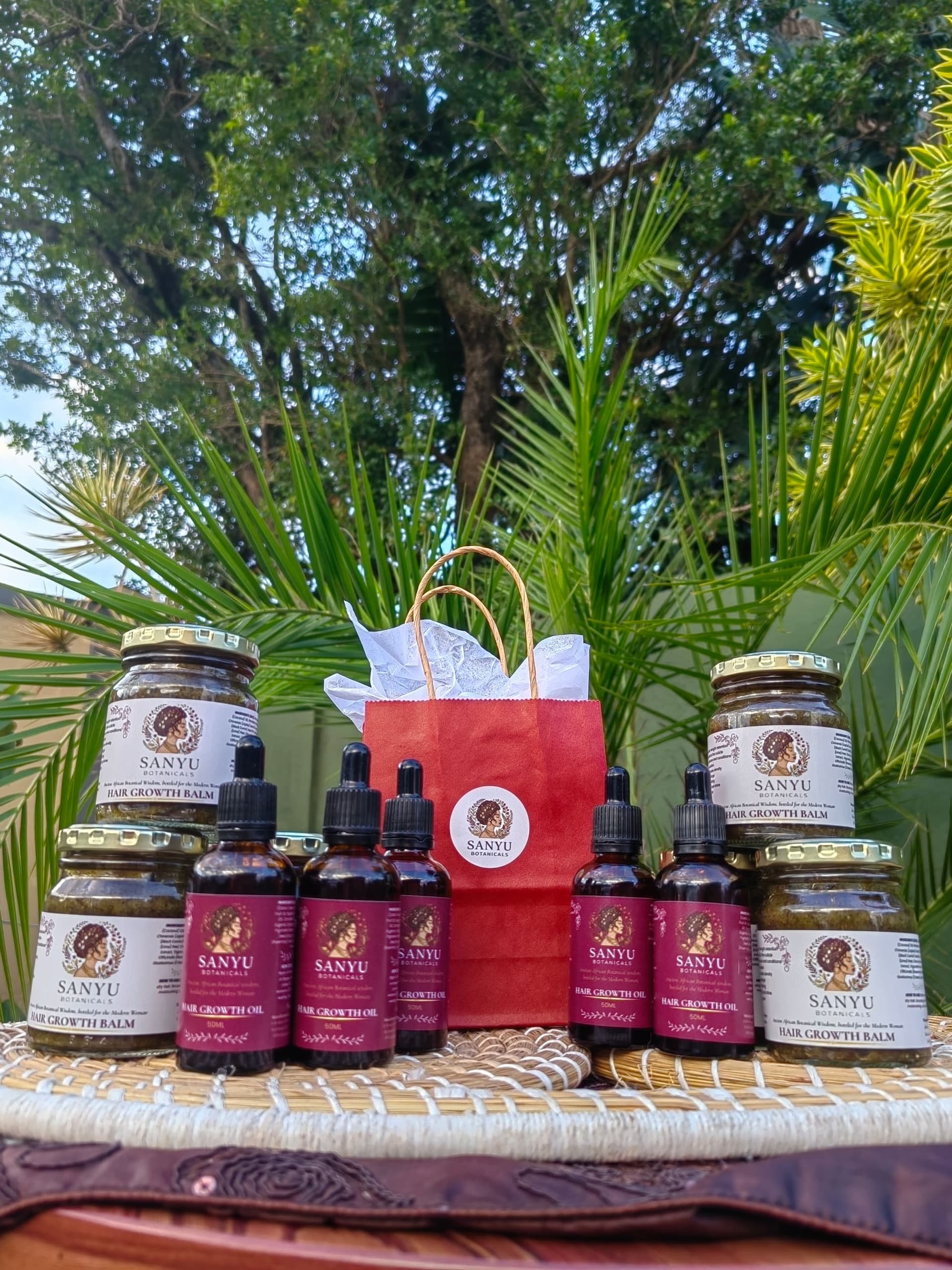
The Sanyu Signature Oil and Hair Growth Balm were formulated to work together as a system. The oil addresses the scalp and shaft from the inside out — penetrating, nourishing, activating. The balm seals and protects from the outside in — coating, smoothing, retaining. Together they provide the full LOC (Liquid-Oil-Cream) structure that Type 4 hair requires to maintain moisture between wash days.
Here is the complete ritual.
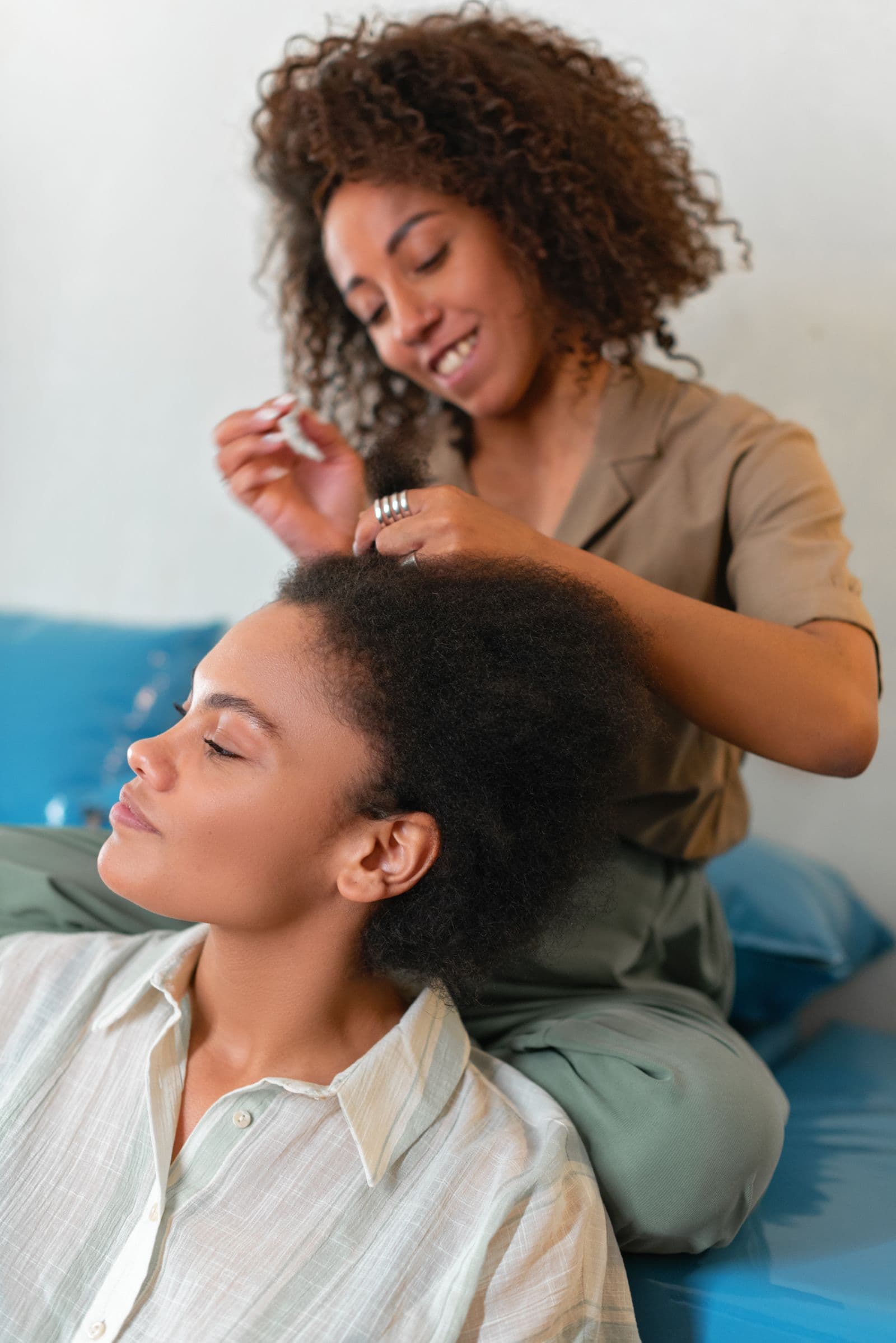
Oil, then balm — the ritual by hand.
Phase 1: The Pre-Poo (Wash Day Eve or 30–60 Minutes Before Washing)
The pre-poo is not optional. It is the step that determines whether wash day builds your hair or depletes it.
On dry hair, divide into four sections. Apply the Hair Growth Balm generously to each section, working from tips to roots — tips first, because they are the oldest, driest, most vulnerable part of the strand. The tips carry years of weather and manipulation. They need the most protection before they meet shampoo.
Work the balm through with your fingers, section by section. The chebe compound in the balm coats the hair shaft and moderates how much the shaft swells when it hits water. The shea butter creates an occlusive barrier that slows surfactant penetration during the wash. The oils penetrate the cortex, providing internal conditioning before the shampoo strips anything from the surface.
Twist or loosely braid each section as you finish it. Put on a satin cap or plastic processing cap. Leave for a minimum of 30 minutes. If you have time, leave for 60 minutes. Overnight under a satin bonnet is optimal — the warmth of your body temperature slightly increases oil penetration.
This is a good time to do something else entirely. The ritual requires waiting. That is part of it.
Phase 2: The Wash
Some questions to answer before you shampoo:
How long since your last clarifying or chelating wash? If it has been more than 4–6 weeks, or if you are in a hard water area and have not chelated in a month, do the clarifying wash first. Mineral and product buildup on the shaft is not removed by standard shampoo, and conditioning on top of buildup is wasted product. Clarify first, then condition.
How is your scalp? If there is itching, flaking, or odour, use a shampoo with anti-fungal properties (look for tea tree oil, salicylic acid, or zinc pyrithione). If your scalp is in good condition, a gentle sulfate-free shampoo or a conditioner-only co-wash is sufficient.
Shampoo the scalp, not the hair. The scalp is what needs cleansing — sebum, sweat, product. The hair will be cleaned by the lather that travels through it during rinsing. Direct, vigorous shampoo application to the hair length removes too much from the shaft.
Rinse thoroughly. Cooler water at the end of your rinse helps close the cuticle.
If you are in a hard water area, do your final rinse with filtered or boiled-then-cooled water. This removes the mineral film that your tap water would otherwise deposit on your freshly cleaned shaft.
Phase 3: The Deep Condition
Apply a deep conditioner (your choice — look for ingredients like hydrolysed proteins, shea butter, or honey for humectant properties) to clean, towel-blotted hair. Section into four. Apply from tip to root, again starting at the ends.
Cover with a plastic cap. Leave for 20–30 minutes. If you have a hooded dryer or can steam, use heat — it opens the cuticle slightly and dramatically increases conditioner penetration, particularly for low-porosity hair.
Rinse. The hair should feel soft, have slip, and not feel heavy or weighed down.
This is also when you detangle — under the conditioner, in four sections, fingers first, then wide-tooth comb working from tip to root. The conditioner provides the slip that prevents mechanical stress during detangling. Do not detangle on dry hair. Do not detangle without conditioner or oil for slip.
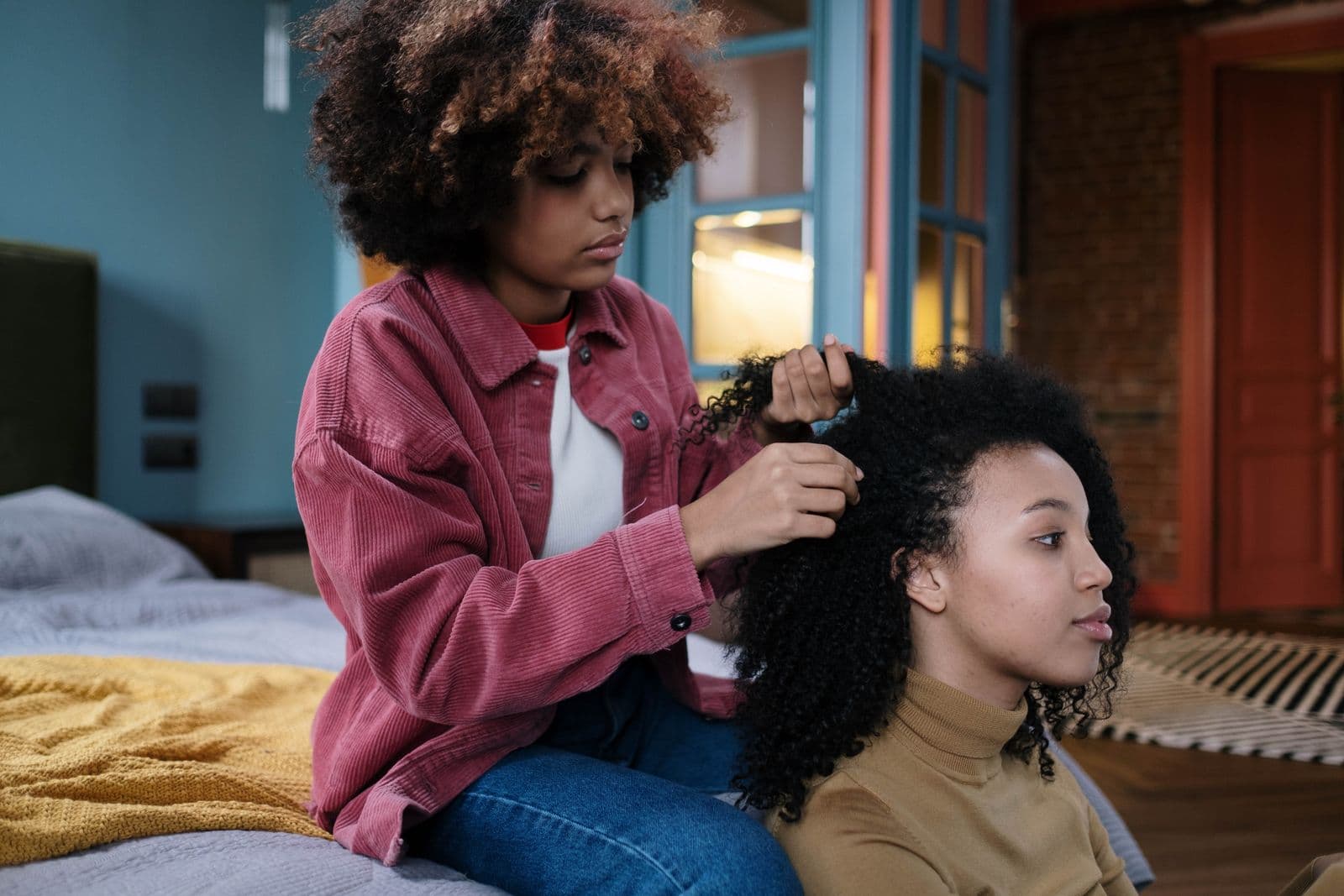
Oil, then balm — the ritual by hand.
Phase 4: L — Liquid (Leave-In or Water)
On freshly washed hair that has been squeezed (not rubbed) with a microfibre towel or cotton T-shirt, apply your liquid layer. This can be:
- A spray of plain filtered water
- A water-based leave-in conditioner
- A mixture of aloe vera gel diluted in water
The purpose of the liquid layer is to deliver water molecules directly to the hair shaft in a form the shaft can absorb before the oil and cream seal it in. Water is the only true moisturiser for hair. Everything else either carries water into the hair, holds water in the hair, or seals water inside the hair. Without the water, the oil and cream are just a coating on a dry strand.
The hair should be damp — not dripping — before the next step.
Phase 5: O — Oil (Sanyu Signature Oil)
This is where the Signature Oil earns its role.
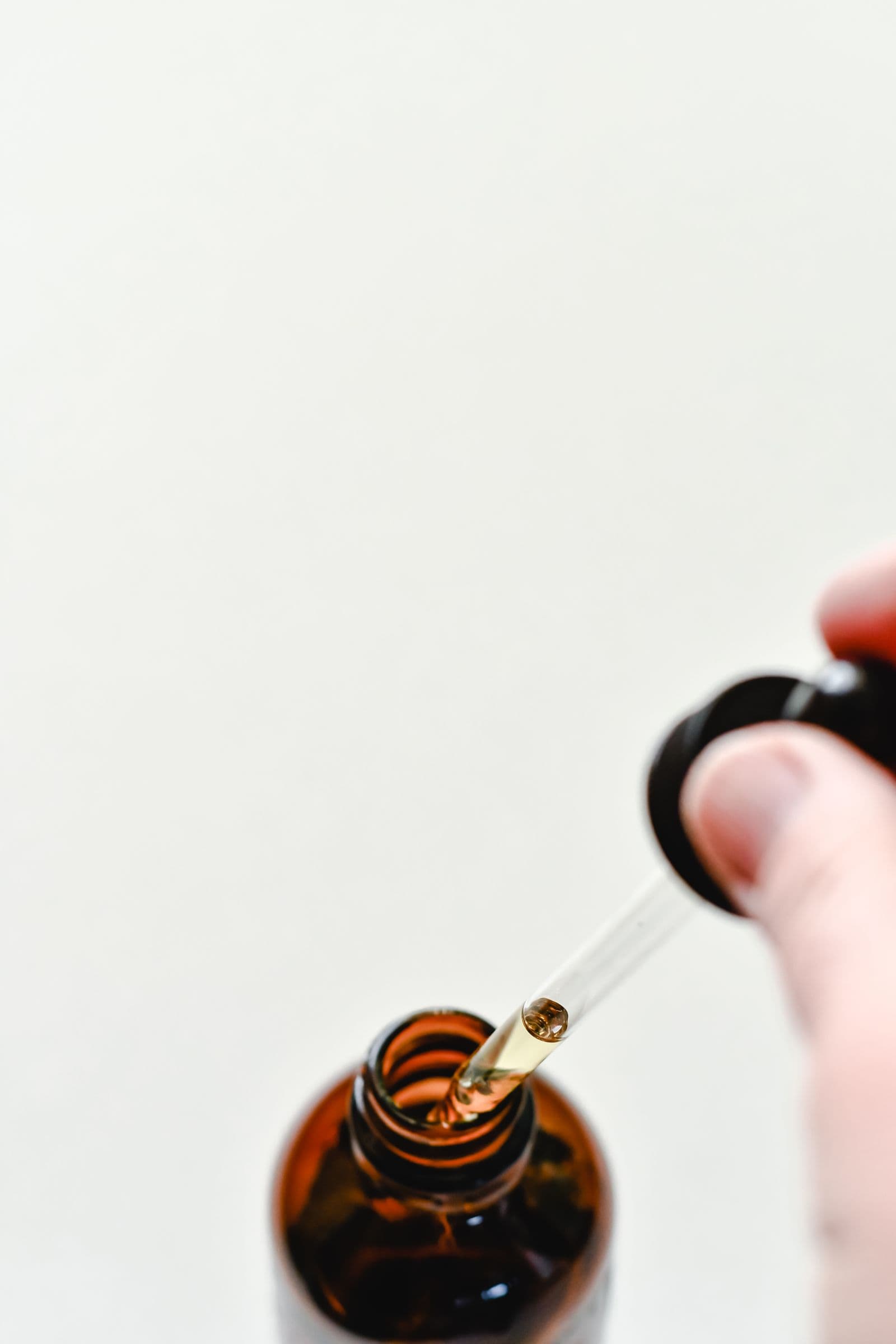
Shake the bottle. Apply 4–6 drops to your fingertips. Part the hair and apply directly to the scalp first: your fingertip or the dropper nozzle, moving along each parting from front to back. Work from the hairline to the nape. Repeat the movement 2–3 times on the scalp.
Then, without adding more oil, work what remains on your hands through the mid-lengths and ends. The oil on your hands is sufficient for the hair length — the scalp application requires more because the scalp is the site of follicle health and active oil absorption.
The black cumin and rosemary work at the scalp: anti-inflammatory, antimicrobial, circulatory. The hemp seed, olive, and castor oils penetrate the hair shaft cortex, providing internal conditioning that the balm's external coating will then seal in. The fenugreek and hibiscus infusion provides protein and mucilage that temporarily smooth and reinforce the cuticle surface.
Do not add more oil than this. More is not better with the scalp application — you want enough to create a meaningful coating, not a saturating one that the scalp has to work to clear.
Phase 6: C — Cream/Butter (Sanyu Hair Growth Balm)
The balm is the seal.
“Emulsify a small amount between your palms — coin-sized for short to medium hair, slightly more for longer or denser hair. Apply to each section in a smoothing motion, cuticle-direction (root to tip), finishing with a light rake-through to ensure even distribution.”
The chebe compound in the balm creates a semi-occlusive coating on the shaft surface. The shea butter seals the cuticle. The coconut oil penetrates any remaining gaps in the cortex. The combined effect is a strand that has water inside it (from the liquid layer), oil reinforcement in the cortex (from the Signature Oil), and a protective surface coating (from the balm).
This is the LOC method working as designed: Liquid hydrates, Oil penetrates and conditions, Cream seals.
Oil, then balm — the ritual by hand.
Styling and Drying
Now style as desired. Two-strand twists, defined wash-and-go, Bantu knots — whatever you are wearing. The balm provides hold as well as moisture seal, so many women with Type 4 hair find they need no additional styling product.
Allow to air dry whenever possible. Heat — even a diffuser — applies stress to the hair shaft. If you must use heat, diffuse on low, and stop while the hair is still slightly damp. Over-drying removes more moisture than you will easily replace.
Between Wash Days: Maintenance
Every 2–3 days, or whenever the hair begins to feel dry, refresh with:
“1. A light mist of water or diluted leave-in to the hair surface 2. 2–3 drops of Signature Oil through the hands, worked through mid-lengths 3. A small amount of balm on the palms, smoothed over the surface”
At night: a satin or silk bonnet, always. Cotton pillowcases create friction against the hair shaft and wick moisture from the strand. A satin bonnet eliminates both. If you resist bonnets, use a satin or silk pillowcase.
The First Two Weeks
For the first 14 days of your Sanyu routine — or after any period of hair neglect or damage — apply the Signature Oil to the scalp nightly, not just on wash day. The consistent daily application builds the scalp health foundation that everything else depends on. After two weeks, move to the 3–4 times per week maintenance frequency.
This is the complete ritual. Every step has a reason. Every reason connects back to the biology of Type 4 hair and the chemistry of the ingredients. Follow it with consistency, adjust where your hair tells you to, and pay attention to what your hair communicates back.
It will tell you when it is right.