Before It Was Just Hair
In many pre-colonial African societies, hair was not merely aesthetic. It was a language.
In Yoruba culture, different hairstyles communicated marital status, social rank, age, and relationship to the divine. The *Irun didi* — intricate threading and weaving patterns — marked life transitions. A widow shaved her head in mourning. A bride wore specific plaiting patterns to communicate her new status. A woman in grief and a woman in celebration wore different hair, and both were understood immediately by everyone around her.
In ancient Egypt, the hairstyles depicted in tomb paintings and on statues were not vanity. They were a system of identification and meaning. Children were often depicted with a single side lock — the *lock of youth* — shaved off at puberty as part of initiation rites. Priests shaved their heads entirely as a marker of spiritual devotion and cleanliness. Elite women wore elaborate wigs over shaved or closely cropped hair, a sign of status and a practical adaptation to the heat.
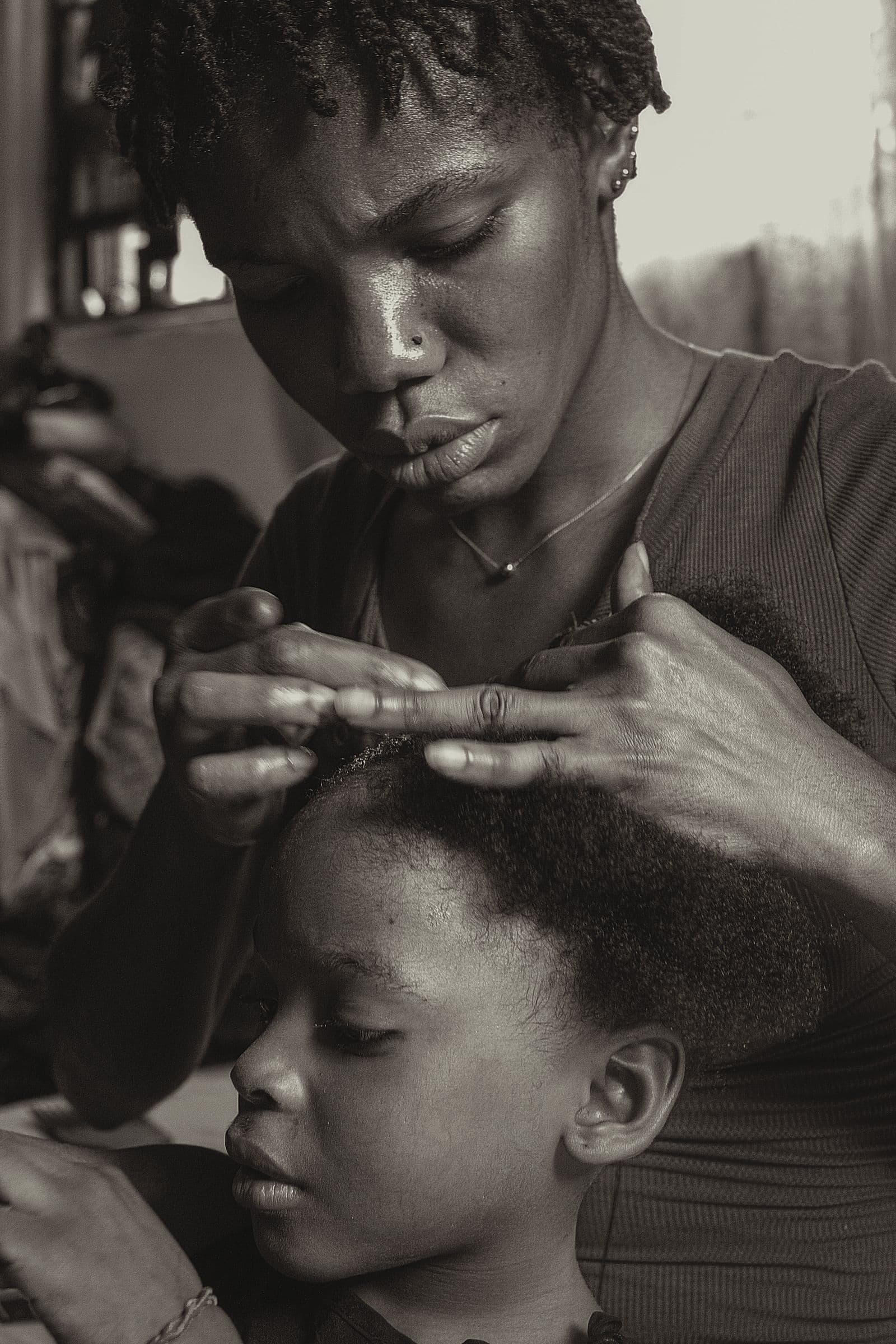
In many Bantu-speaking cultures across East and Central Africa, the art of hair braiding was held by specialists — women who occupied a role close to that of a healer or counsellor. The intimacy of the braiding session, which could last hours, created a space for sharing information, resolving conflicts, and maintaining community bonds.
The Disruption
Colonialism was a rupture in this language.
The most direct form of disruption was the shaving of enslaved people's heads. In the transatlantic slave trade, this was done upon capture and again periodically. It was simultaneously a dehumanising act, a practical measure against lice, and a symbolic erasure: stripping people of their identity, their markers of status and clan, their connection to their communities.
In colonial Africa, mission schools taught that natural African hair was "unkempt," "primitive," and needed to be "managed." The language of hair management — controlling, taming, fixing — entered African consciousness through this lens. European beauty standards, which prized straight hair as the norm, were institutionalised through school dress codes, professional expectations, and the mass marketing of relaxers and straightening products in the 20th century.
The damage was not only aesthetic. It was epistemological: a generation of African women came to experience their own hair as a problem to be solved rather than an attribute to be honoured.
What Traditional Hair Knowledge Looked Like
Prior to colonisation, African women across the continent had developed sophisticated botanical knowledge about hair care, accumulated and transmitted over generations.
In West Africa, shea butter — harvested by women, processed by women, traded by women — was a foundational hair and skin care ingredient. The process of extracting shea butter from the fruit of *Vitellaria paradoxa* was labour-intensive and deeply communal. Knowledge about which plants to add to shea preparations for specific hair conditions (scalp inflammation, breakage, thinning) was held by older women and passed to younger women.
In East Africa, sesame oil (*Sesamum indicum*) was used in Uganda and Tanzania for both scalp treatment and body care. Ugandan women in the Buganda Kingdom used preparations of herbs and oils that would be recognisable to any modern natural hair practitioner: scalp oiling, protective braiding, moisture sealing. The word *sanyu* — joy in Luganda — was and is part of a cosmological understanding of wellness. Joy, in this tradition, is not merely a feeling. It is a state of alignment: with the body, with the community, with the land.
The Recovery
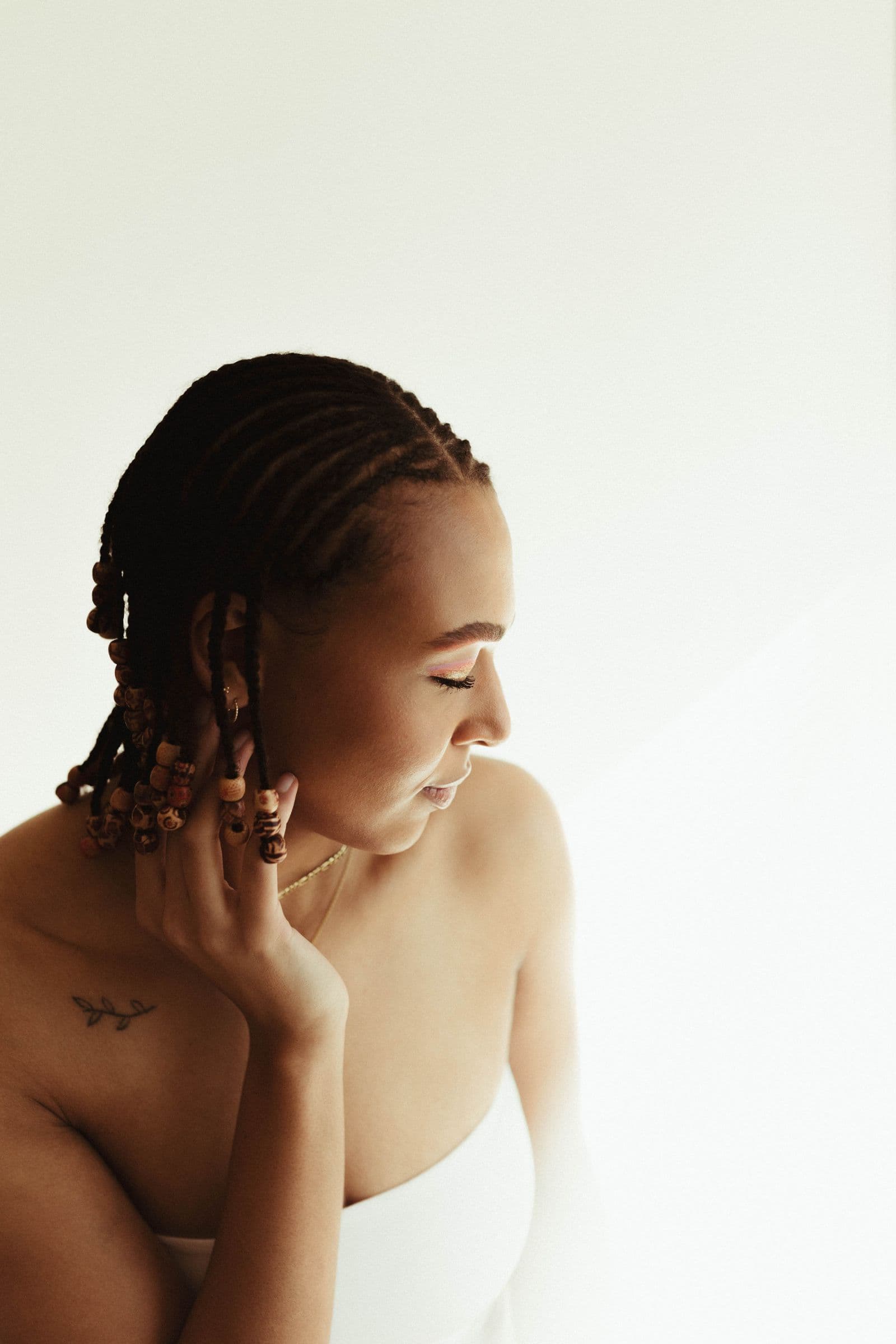
“The natural hair movement, which gained cultural momentum in the 1960s with the "Black is Beautiful" civil rights aesthetic and re-emerged powerfully in the 2000s, is not a trend. It is a recovery project.”
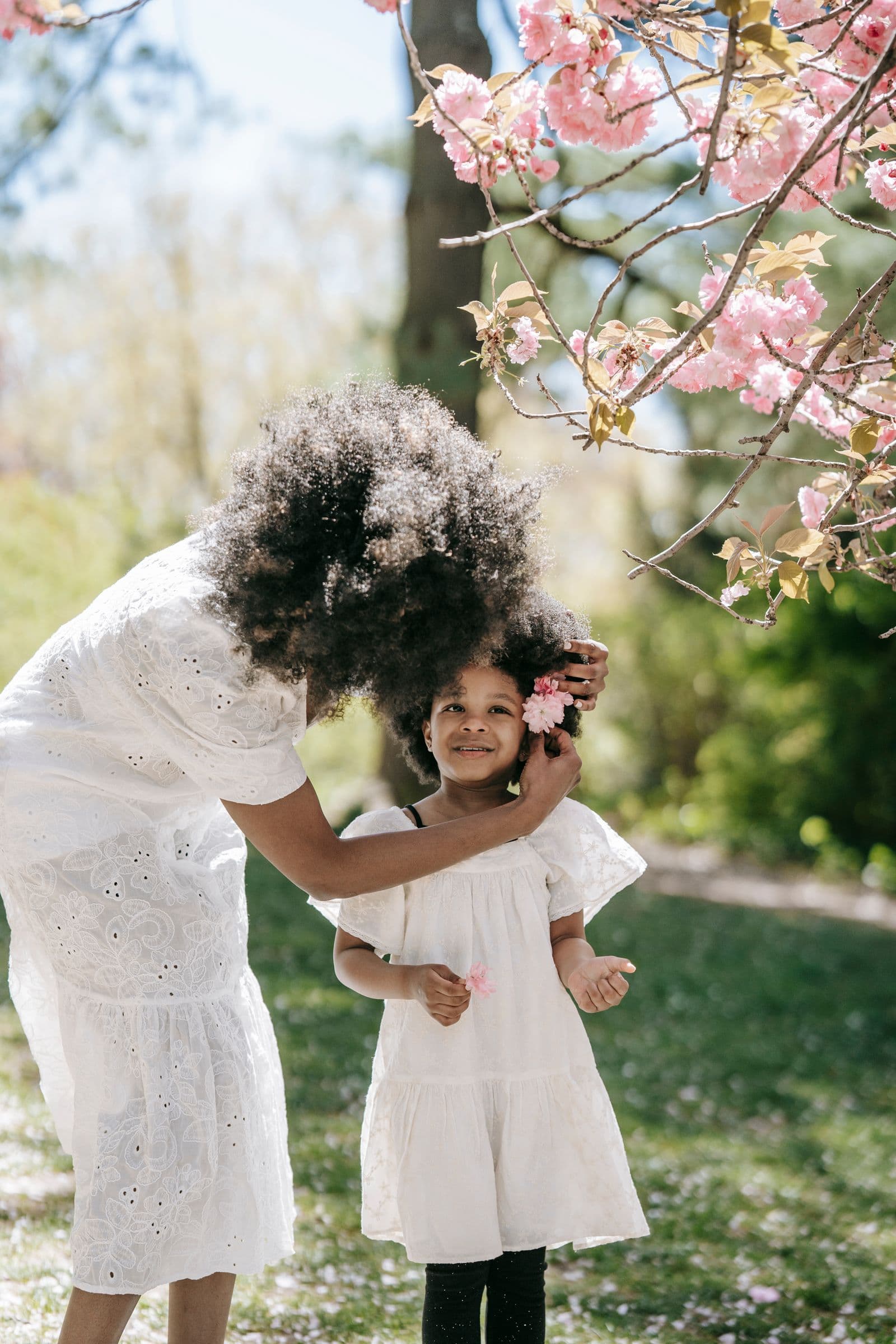
When a woman decides to stop chemically altering her hair, she is not just making a product choice. She is undoing a process that took generations to install. She is returning to a practice — hair as self-knowledge, hair as ritual, hair as language — that existed long before anyone told her it was a problem.
The knowledge is not entirely lost. It is held in grandmothers' hands, in the muscle memory of braiders, in the ingredient lists of women who learned what their grandmothers grew in their gardens. It is reconstructable.
Why This Matters for a Hair Brand
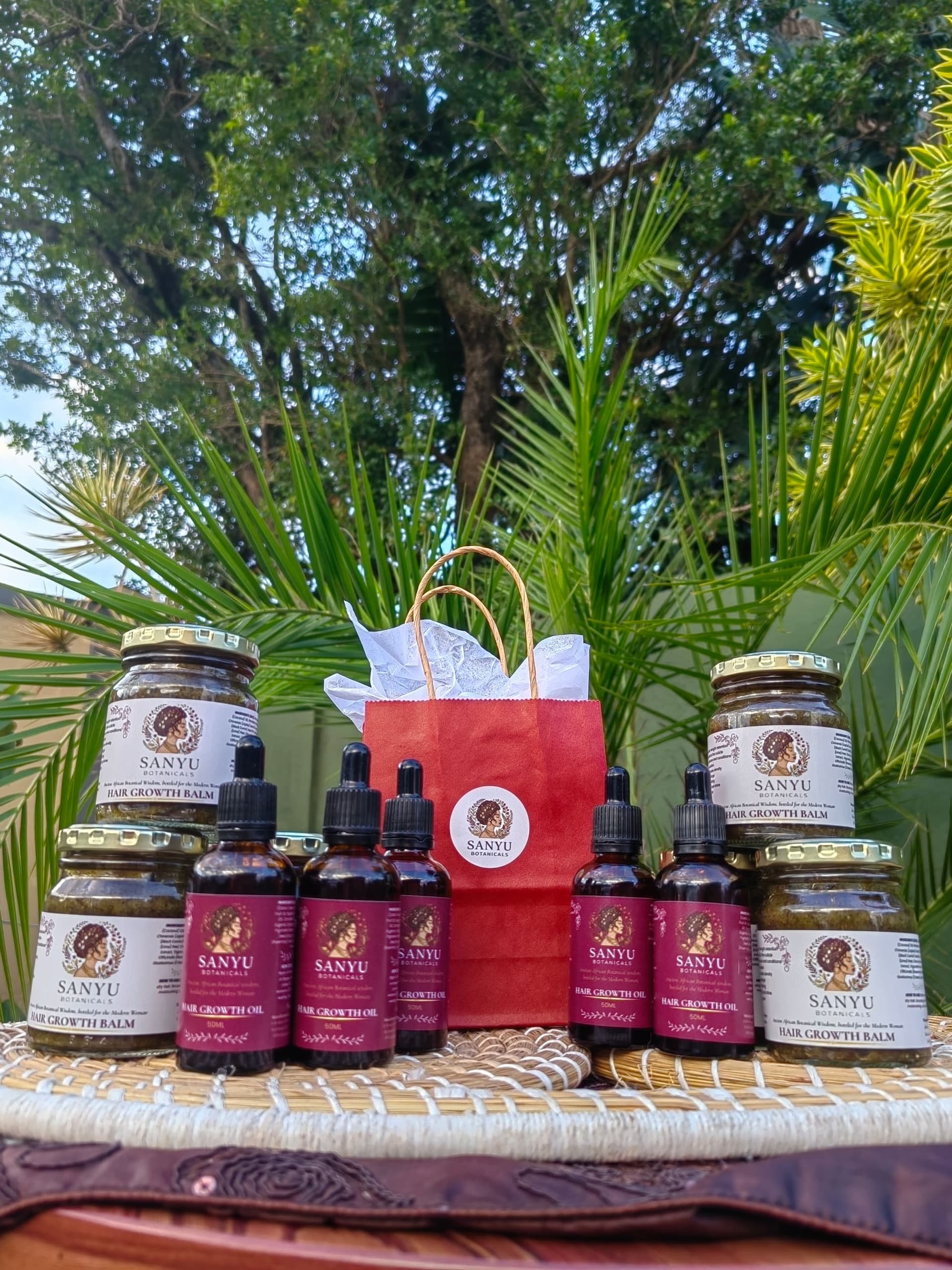
Sanyu Botanicals is not a novelty product. It is an attempt to situate hair care back within the tradition it was extracted from: African botanical knowledge, applied with intention, for women who understand that their hair is not a problem to be managed but a living part of themselves to be honoured.
The ingredients in our formulations — chebe, black cumin, neem, castor, fenugreek, hibiscus — are not exotic imports chosen for marketing appeal. They are plants that African and South Asian healers have used for hair health for centuries. We are not inventing anything. We are returning to something.
This is what the ritual means. Not just washing and conditioning. Re-establishing a relationship with your hair that was designed to be there from the beginning.