The Women Who Never Cut Their Hair
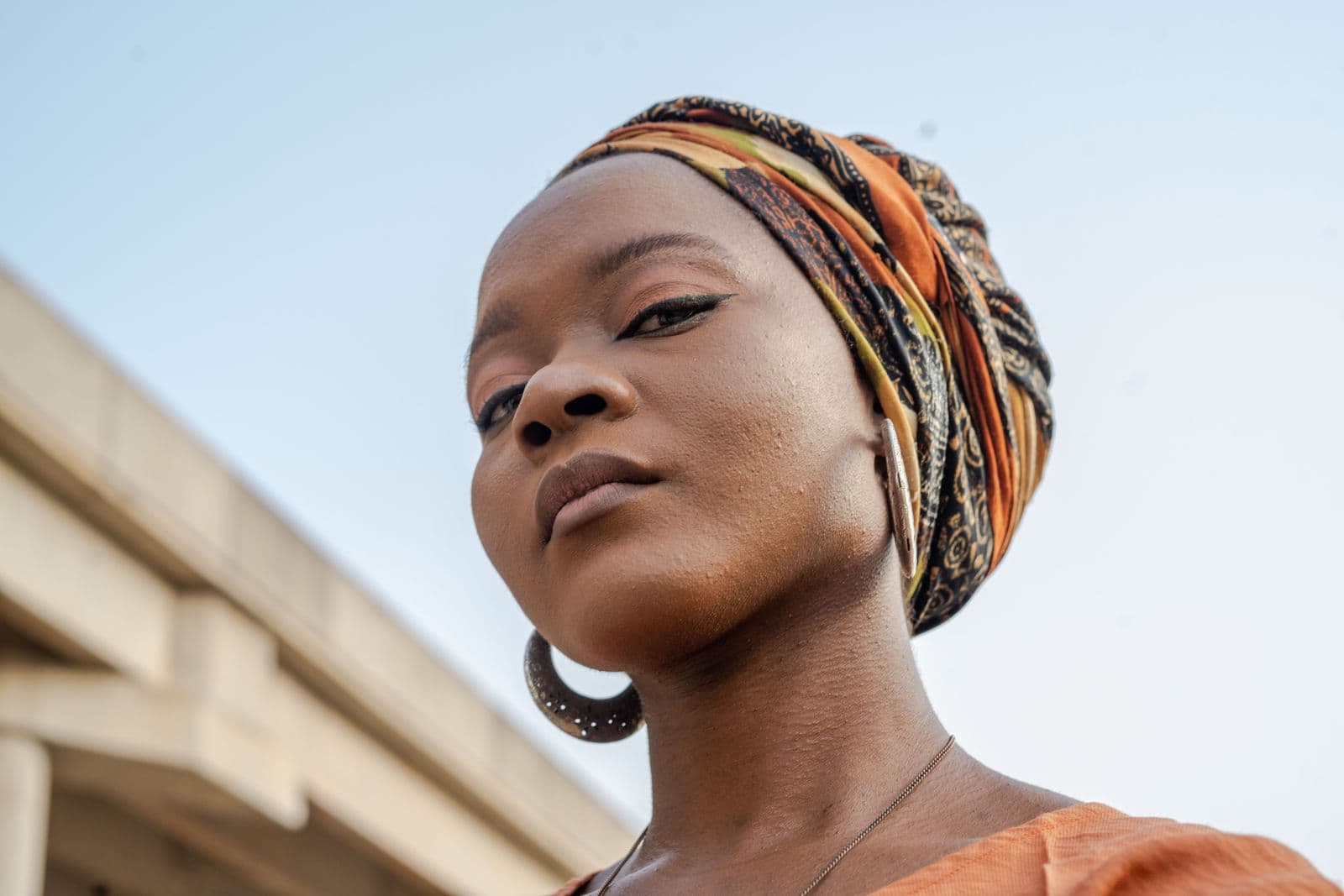
There is a photograph that circulates quietly in natural hair communities. Basara Arab women from the Hadjer-Lamis region of Chad, their hair cascading past their hips in thick, voluminous coils. Not straightened. Not chemically processed. Natural, Type 4 hair at lengths most women in the Western world are told their hair cannot reach.
They have been doing this for generations. Their secret is chebe.
What Is Chebe?
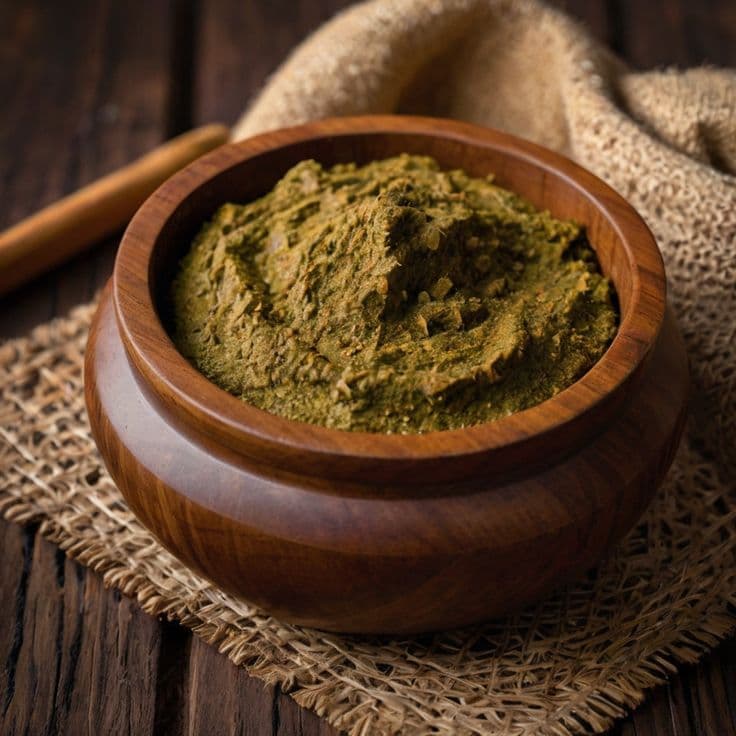
Chebe is the powdered leaf of *Croton zambesicus*, a shrub native to the Lake Chad basin. The name comes from the Sara language; in some regions it is also called "karkar" or "jabsou." The preparation varies by family and region, but the core method is consistent: the dried leaves are ground into a fine powder, mixed with other botanicals (clove, resin, cow butter, or animal fat), and applied to the hair from root to tip as a thick paste.
The hair is then divided into sections, the paste worked in thoroughly, and often wrapped or braided to keep it in place. The ritual is repeated every few days.
Under the microscope
A single strand, magnified
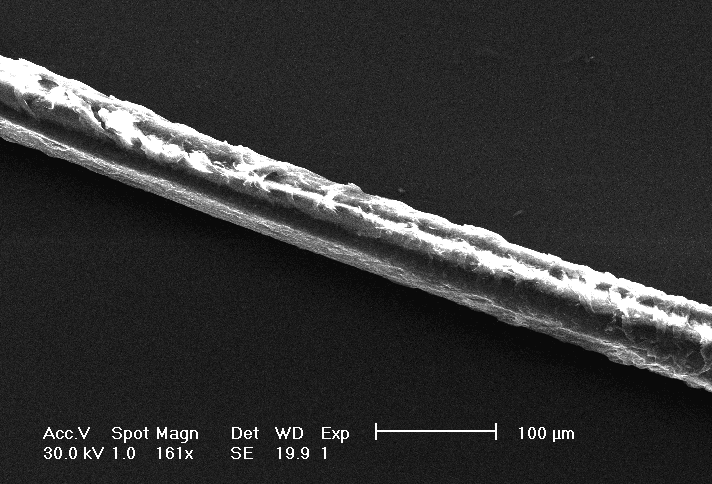
Under the electron microscope a human hair is a rope of keratin sheathed in the cuticle — the strand's outer armour. Oils and butters lie over it, slowing the moisture loss that costs you length.
SEM: Foreade · CC BY-SA 4.0 · Wikimedia Commons
The Science of Retention
Chebe does not stimulate hair growth directly. This is the most important thing to understand. Every strand of hair on your head is the same length — the difference is in how much of it breaks off before it reaches your shoulders, your back, your hips.
For Type 4 hair, the primary challenge is not growth rate. Your follicles are producing hair at approximately the same rate as anyone else's — roughly 1.25 cm per month, or 15 cm per year. The challenge is that tightly coiled hair is structurally fragile at every curl apex. Each bend in the helix creates a mechanical weak point. Dryness, friction, manipulation, and UV exposure all attack these points.
Length retention is the discipline of protecting these weak points long enough for your hair to grow.
What Chebe Does to the Shaft
Research into the biochemistry of *Croton zambesicus* leaves identifies several active compounds:
Tannins
Polyphenolic compounds that bind to proteins in the hair shaft, temporarily hardening and smoothing the cuticle layer. This dramatically reduces porosity — the rate at which moisture enters and exits the strand. High porosity is the enemy of length retention because it leads to constant swelling and contraction of the shaft, weakening it over time.
Volatile organic compounds
Monoterpenes and sesquiterpenes that may inhibit microbial activity on the scalp, reducing dandruff-causing fungi that inflame follicles.
Resinous compounds
Create a semi-occlusive coating on the hair shaft that reduces friction between strands, which is a primary cause of mechanical breakage in tightly coiled hair.
When chebe is combined with oil (traditionally animal fat; in our formulation, a blend of five botanically significant oils), the oil penetrates the shaft through the cuticle while the chebe compounds work on the outer layer. The result is a strand that is simultaneously nourished internally and protected externally.

How the Sara Women Apply It
The traditional method is not a quick treatment. It is a ritual.
The hair is dampened first. The chebe paste is worked in by hand, section by section, ensuring full coverage from scalp to tip. The hair may be braided in protective styles, or simply worn in twisted sections while the treatment works. The process is communal — women apply it to each other, sitting together, talking.
This communality is not incidental. The ritual creates accountability and consistency. And consistency is everything when it comes to hair health.
The Sanyu Balm Approach
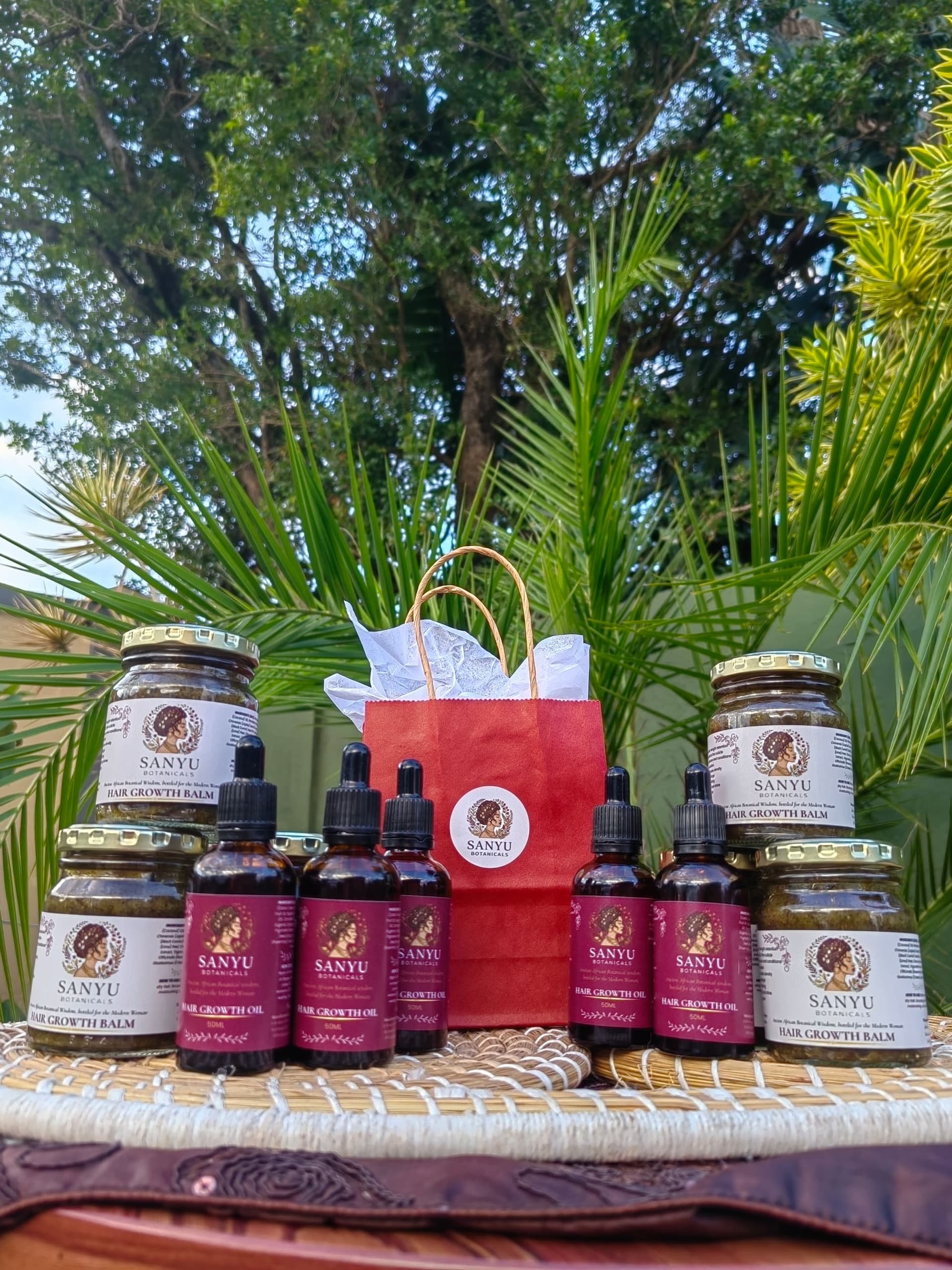
Our Hair Growth Balm takes the foundational logic of chebe — protect the shaft, seal the cuticle, reduce breakage — and marries it with our Signature Oil blend. The 500ml of cold-infused oil (black cumin, castor, neem, hemp seed, olive, fenugreek, hibiscus, clove, rosemary) is incorporated directly into the chebe base during production.
This means every jar contains both the protection of the traditional chebe preparation and the scalp-stimulating, shaft-strengthening compounds of the oil infusion.
“Apply it like the Sara women apply theirs: section by section, root to tip, with intention. Leave it in before washing. Use it as a daily sealant after moisturising.”
Your hair was built for this. It has been waiting for this knowledge to come back to it.